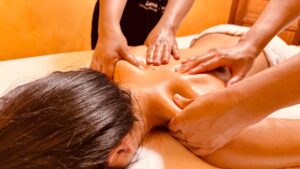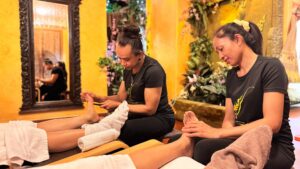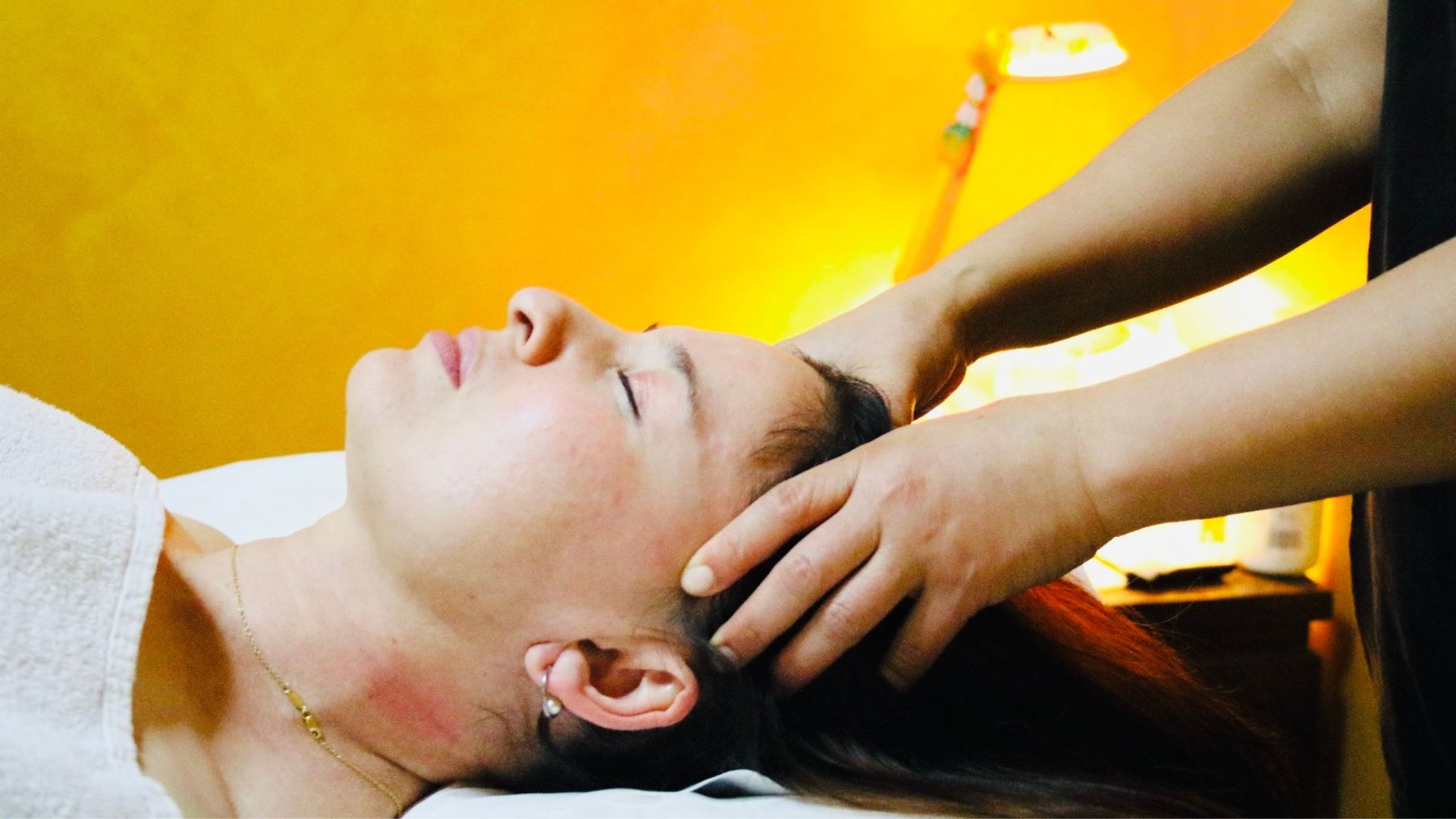
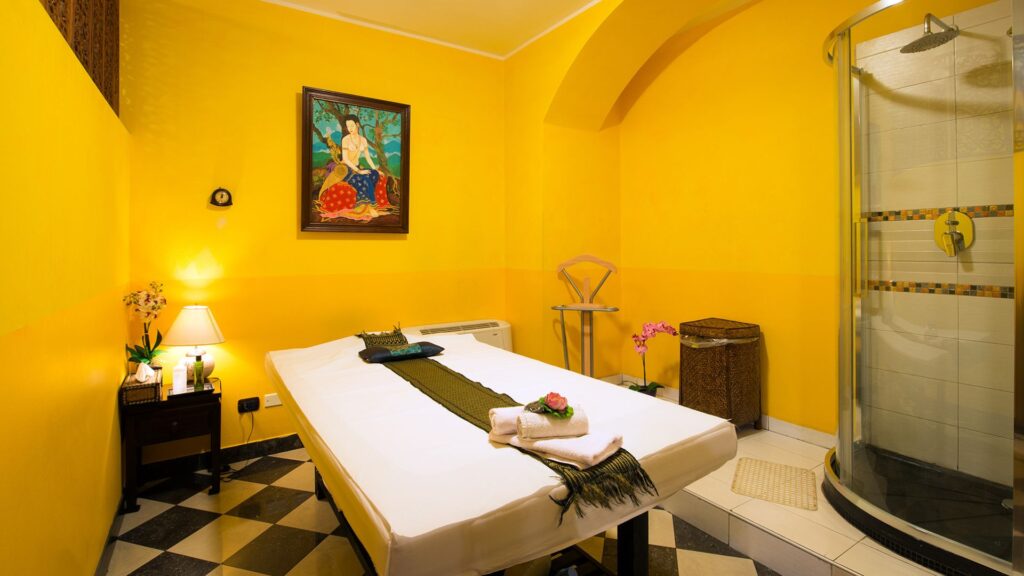
Oriental massage is an art that celebrates the deep connection between body, mind and spirit. It is an invitation to slow down, to find harmony by immersing oneself in ancient Thai, Chinese, Indian, and Japanese traditions, each of which tells a unique story, interweaving culture and wisdom. To indulge in an Oriental massage is to allow yourself to be imbued with a philosophy of life: each touch is an act of healing, each breath a step toward a more authentic awareness.
Let’s discover together the types, techniques, and curiosities of these fascinating practices.
The different types of oriental massage
Oriental massage comes in many forms, each with unique characteristics and extraordinary benefits.
Here are the most popular types:
Thai oriental massage
Thai massage, or Nuad Thai, is an age-old practice that combines yoga-inspired stretching, rhythmic pressure, and manipulation. Traditionally practiced without oils, on a mat on the floor, it is based on stretches and movements that improve posture, release tension and awaken vital energy. However, there is a more “modern” version viz. Thai massage with essential oils, which adds an even more relaxing sensory experience, ideal for those seeking suppleness, lightness and a deep connection between body and spirit.
Want to learn more about the extraordinary benefits of Thai massage?
Read our in-depth study What are the benefits of Thai massage?
Japanese shiatsu
Shiatsu is actually a dance of gradual pressure on energy meridians called tsubo. Through fingers, palms and elbows, the massage therapist releases energy blockages, relieves muscle aches and stiffness, and stimulates the flow of Ki. Recognized as a complementary therapy in Japan since 1950, Shiatsu combines science and Eastern philosophy to offer a holistic treatment that relaxes the mind, regenerates the body and restores inner balance.
Indian Ayurvedic Massage
Ayurvedic massage, on the other hand, is based on the principles ofAyurveda, which aims to rebalance the vital energies or doshas(Vata, Pitta, Kapha). This multisensory technique, which uses medicated oils enriched with natural herbs and rhythmic, enveloping movements, promotes body purification, relieves stress, and provides a deep sense of well-being.
Chinese oriental massage
A pillar of Traditional Chinese Medicine (TCM), Chinese massages such as Tui Na and Zhi Ya work on the meridians to improve the flow of qi. The skillful combination of pressure, manipulation, and joint movements relieves pain, improves circulation, and restores balance to the energy system. Each session is customized to balance Yin (relaxation) and Yang (stimulation), offering an experience that harmonizes body and spirit.
Balinese massage
Originating in Indonesia, Balinese massage is a fusion of Indian, Chinese, and Indonesian techniques. Characterized by long, gentle, enveloping movements combined with gentle pressure and aromatic oils, it is a celebration of holistic well-being, an ideal panacea for those who wish to immerse themselves in a state of total serenity and inner connection.
Eastern massage techniques: when body and energy dance together
Each Eastern technique is based on a unique experience of rebalancing and regeneration. Below we look at the main ones:
- Rhythmic pressures: typical of Shiatsu and Chinese massage, they stimulate energy meridians, dissolving tension and blockages.
- Passive stretching: characteristic of Thai massage, it improves flexibility and loosens muscle stiffness, creating a feeling of freedom and lightness.
- Joint manipulations: used in the Tui Na, release deep tension, improve posture and reduce pain.
- Flowing, enveloping movements: found in Balinese and Ayurvedic massage, purify the body and calm the mind with warm, aromatic oils.
Specific techniques such as the Zhi Ya, focus on acupressure points to treat the root causes of disorders and rebalance energy.

Some interesting facts about oriental massage
Did you know that oriental massage hides fascinating curiosities? Here are some you may not have known:
- Energy meridians-Tsubo in Shiatsu, Sen in Thai massage, Dosha in Ayurveda, and Qi in Chinese medicine-these energy flows are the basis of every Eastern technique.
- Spiritual origins: Thai massage is related to Buddhism and is said to have been developed by the Buddha’s personal physician, Jivaka Kumar Bhaccha.
- Passive yoga: Thai massage is often referred to as “yoga for lazy people” because of its use of assisted yoga postures that relax the body effortlessly.
- Ayurvedic personalization: No two Ayurvedic massages are the same because they are adapted to the specific needs of the recipient.
- Mindful B reathing: Breathing is a mainstay of many Eastern techniques, as it helps enhance the effectiveness of treatment and roots the body in deep balance. Even, moments of meditation are included in Ayurvedic massage, offering a holistic experience of total relaxation.
These ancient techniques are the gateway to a world whereenergy and well-being come together, inviting you to rediscover your inner balance.
Do you want to try an oriental massage?
It starts with a Thai massage.