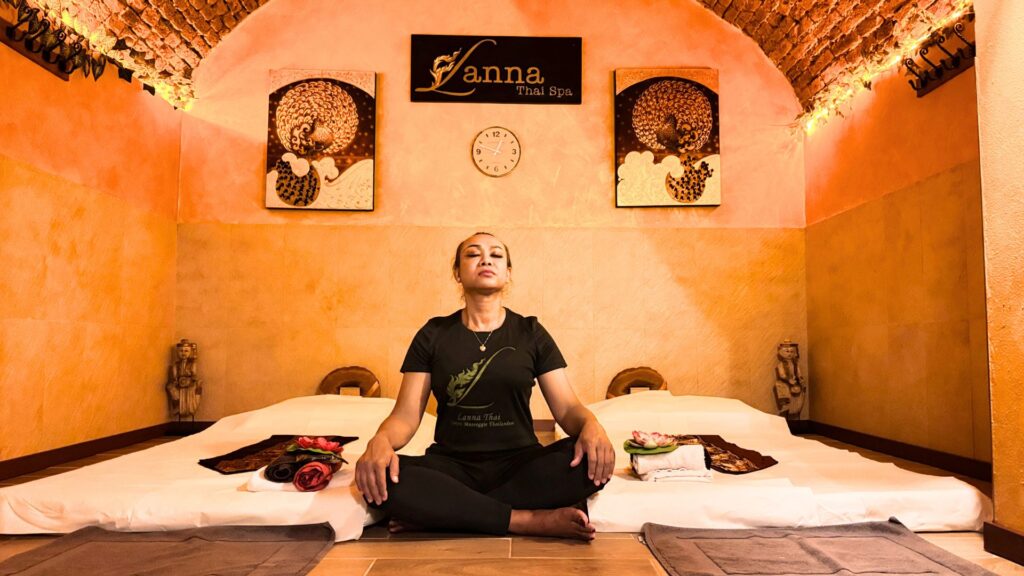
On the massage table, between the warmth of the practitioner’s hands and the enveloping scent of essential oils, there is an often underestimated but crucial element: breathing.
A simple mindful breathing exercise can amplify each touch, transforming the session into something beyond physical relaxation-a true regeneration of body and spirit.
Many people rely on massage passively, letting their hands do everything. But when breath and touch meet, a silent dance is born that brings clarity, calm and lightness, dissolving even the heaviest thoughts.
How breathing activity affects the body during massage through proper breathing exercises
Breathing is an invisible thread that holds mind and body together. During a massage, practicing a breathing exercise allows the muscles to let go and increases the effectiveness of each maneuver. In fact:
- Deep inhalation nourishes the muscles with oxygen and vitality.
- Slow exhalation releases accumulated tension, stress and thoughts.
- The regular rhythm of breathing calms the heart and promotes endorphin production.
In this harmonious dialogue, the hands guide from the outside while the breath accompanies from within. The body thus enters a state of tangible stillness that prolongs the benefits of massage even after the session.
The benefits of breathing during massage
Integrating a breathing exercise into a treatment is like adding a secret ingredient: it makes everything deeper, more fluid and transformative.
The main benefits are:
- Total relaxation: muscles relax faster.
- Tissue oxygenation: the body receives new energy and vitality.
- Stress management: each exhale releases thoughts and tensions.
- Body awareness: breath brings attention back to the present.
- Energy balance: in Eastern traditions it promotes the flow of Qi, the vital energy.
These are then complemented by long-term benefits: deeper sleep, reduced swelling due to support of the lymphatic system, and increased resilience to daily stress.
Breathing well during a massage therefore means both releasing emotional tensions and finding harmony within and without.

Breathing techniques to be adopted during massage
Each breathing exercise brings with it different effects: some relax muscles, others calm the mind or stimulate vital energy.
Among the most effective breathing techniques to incorporate during massage:
- diaphragmatic breathing
- square breath
- alternating breathing
- conscious breathing
- breathing 4-7-8
- synchronized breathing
- wave breathing
- focused breathing
Diaphragmatic breathing
Inhale through the nose inflating the abdomen, exhale slowly through the mouth. This simple gesture sends a signal to the body: it activates the parasympathetic system, prepares the muscles for release and facilitates relaxation.
Square Breath
Inhale, hold, exhale and pause for 4 seconds each. The steady rhythm of this breath gives mental stability and makes the massage more noticeable, as if the mind becomes a calm lake.
Alternating Breathing (Nadi Shodhana)
Inhale through one nostril and exhale through the other, then reverse. This breathing exercise rebalances the two halves of the body, calms the mind and establishes deep inner harmony.
Conscious Breath
No counting or patterns are needed here: just observe the air going in and out, letting it become a natural flow. It is the breath of presence, transforming the massage into a silent meditation.
Breathing 4-7-8
Inhale for 4 seconds, hold for 7, exhale for 8. This breathing exercise, devised by Dr. Andrew Weil, is a powerful ally in stress-relieving massages and helps to quickly lower tension levels.
Synchronized breathing
Coordinates the breath with the practitioner’s movements: inhale in stretches, exhale in pressures. A dance that amplifies the effects of massage, especially in dynamic massages such as Thai Yoga.
Wave breathing
Visualize inhalation as a wave rising from the feet to the head and exhalation as one descending. A particularly good breathing exercise in oil massages, which promotes energy circulation throughout the body.
Focused breathing
If the massage focuses on a tense area, such as the neck, back or feet, bring the breath in there. This will speed up muscle release and make the practitioner’s work even more effective.
How Lanna Thai masseuses guide you in breathing exercises
It’s not always easy to remember to breathe in the right way during a massage.
That’s why our team of Thai masseuses accompany you with gestures and suggestions that bring the breath back to its natural rhythm, thus transforming it into a silent ally capable of enhancing the benefits of each treatment.
Thanks to simple techniques, guided visualizations and integrated breathing exercises, massage doesn’t remain confined to the couch, but becomes a ritual of well-being that you can bring into your daily life as well.
Discover the power of mindful breathing:
those who learn to breathe well, also learn to live more lightly.